
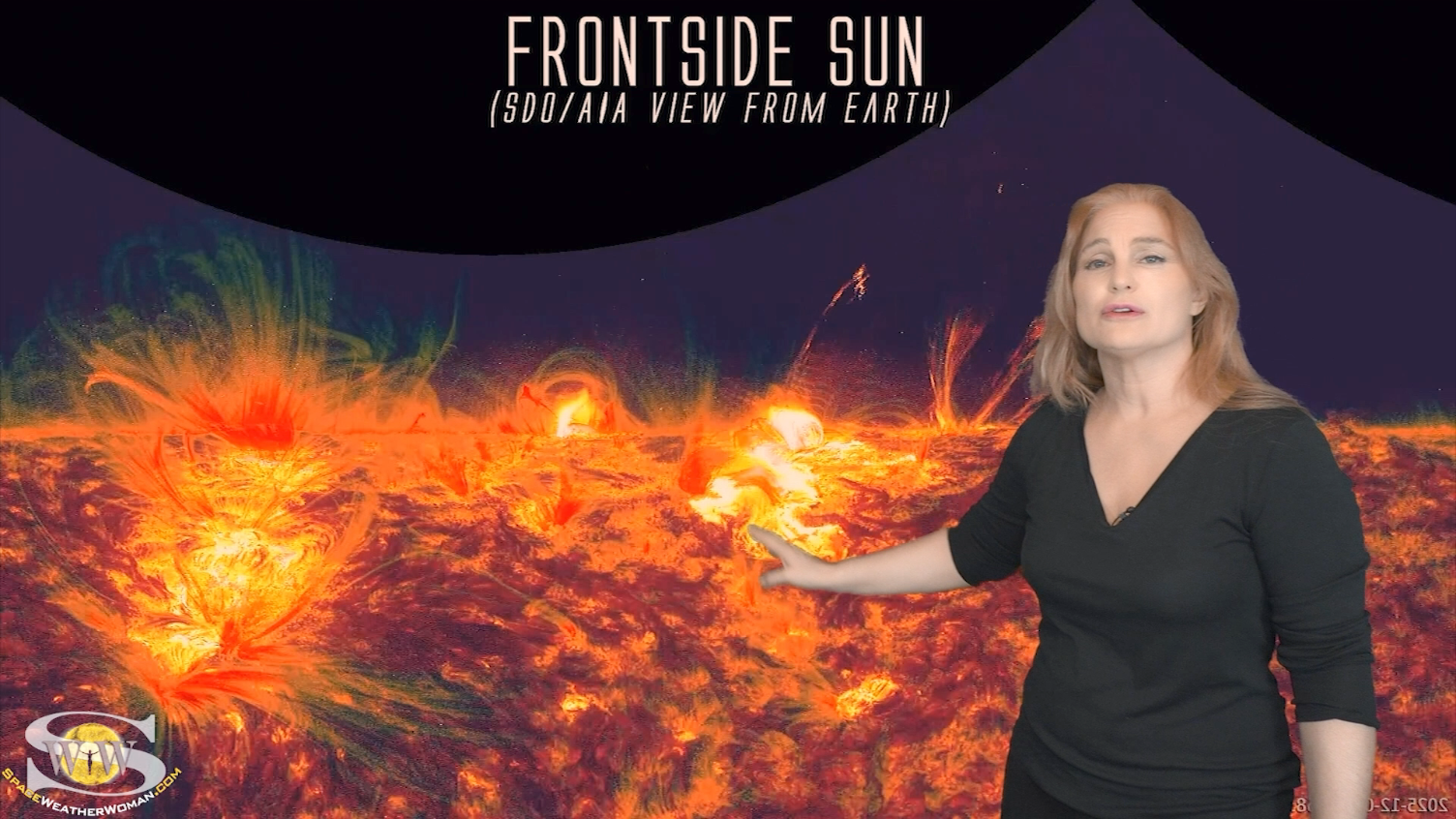
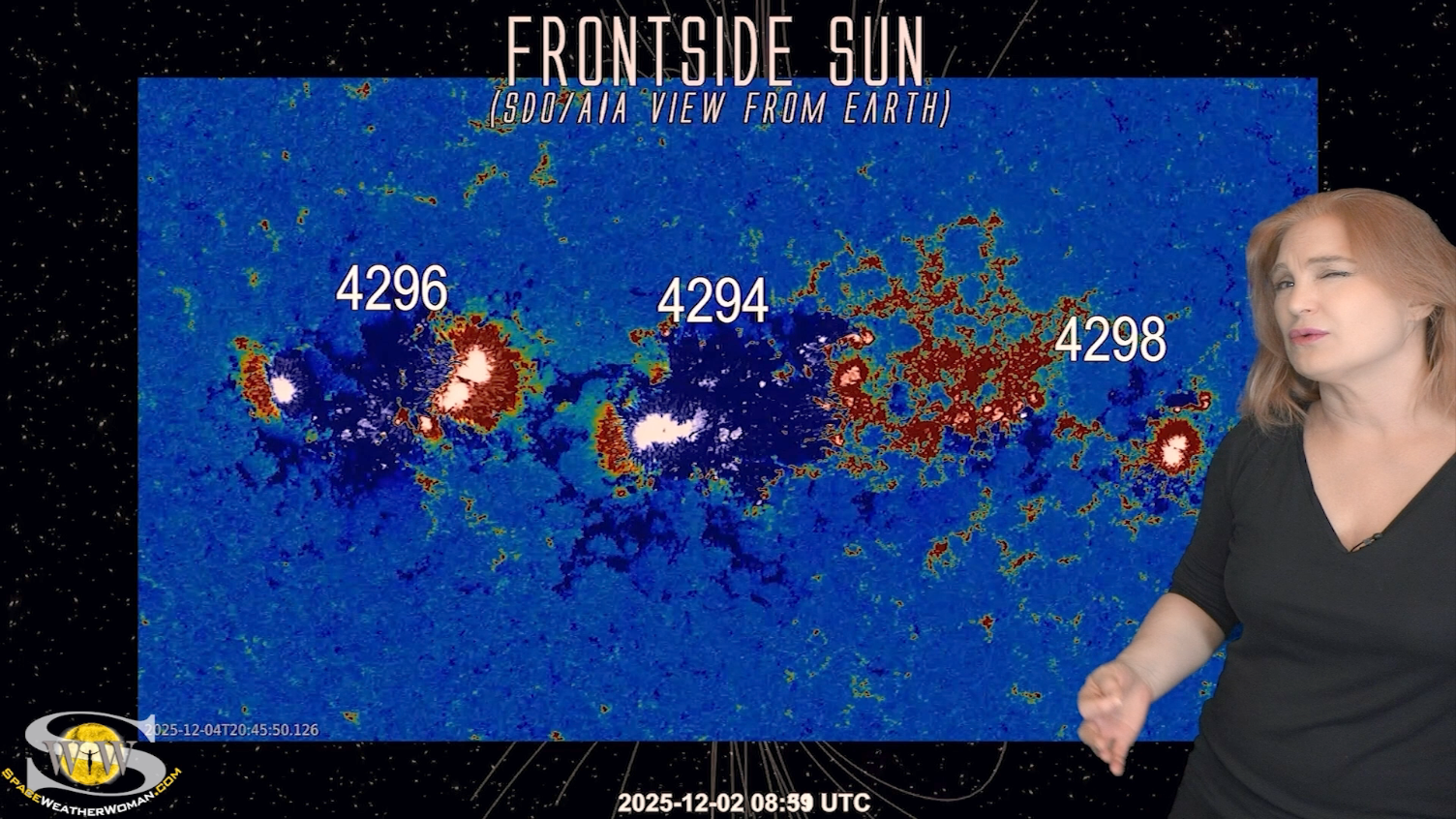
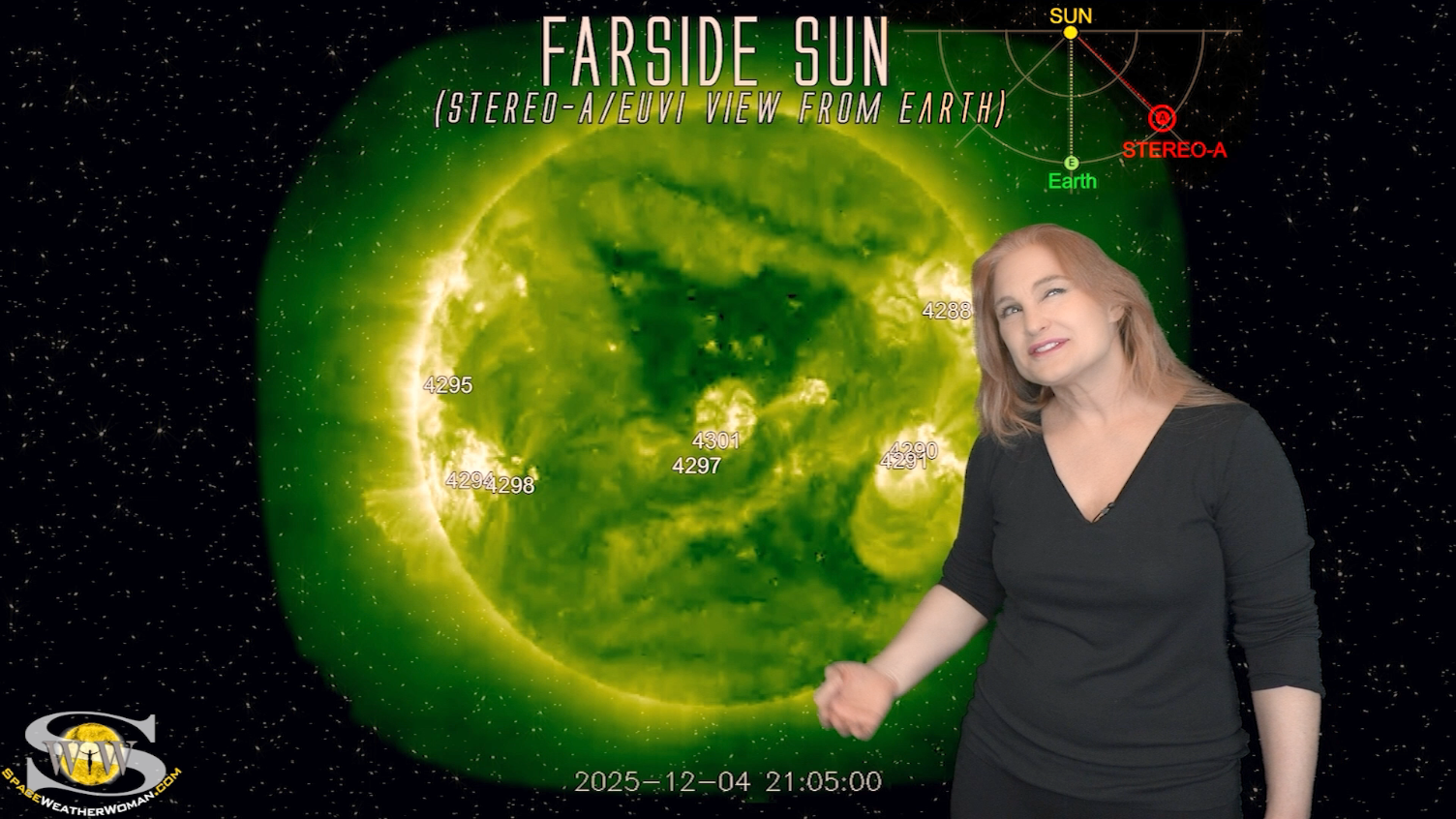
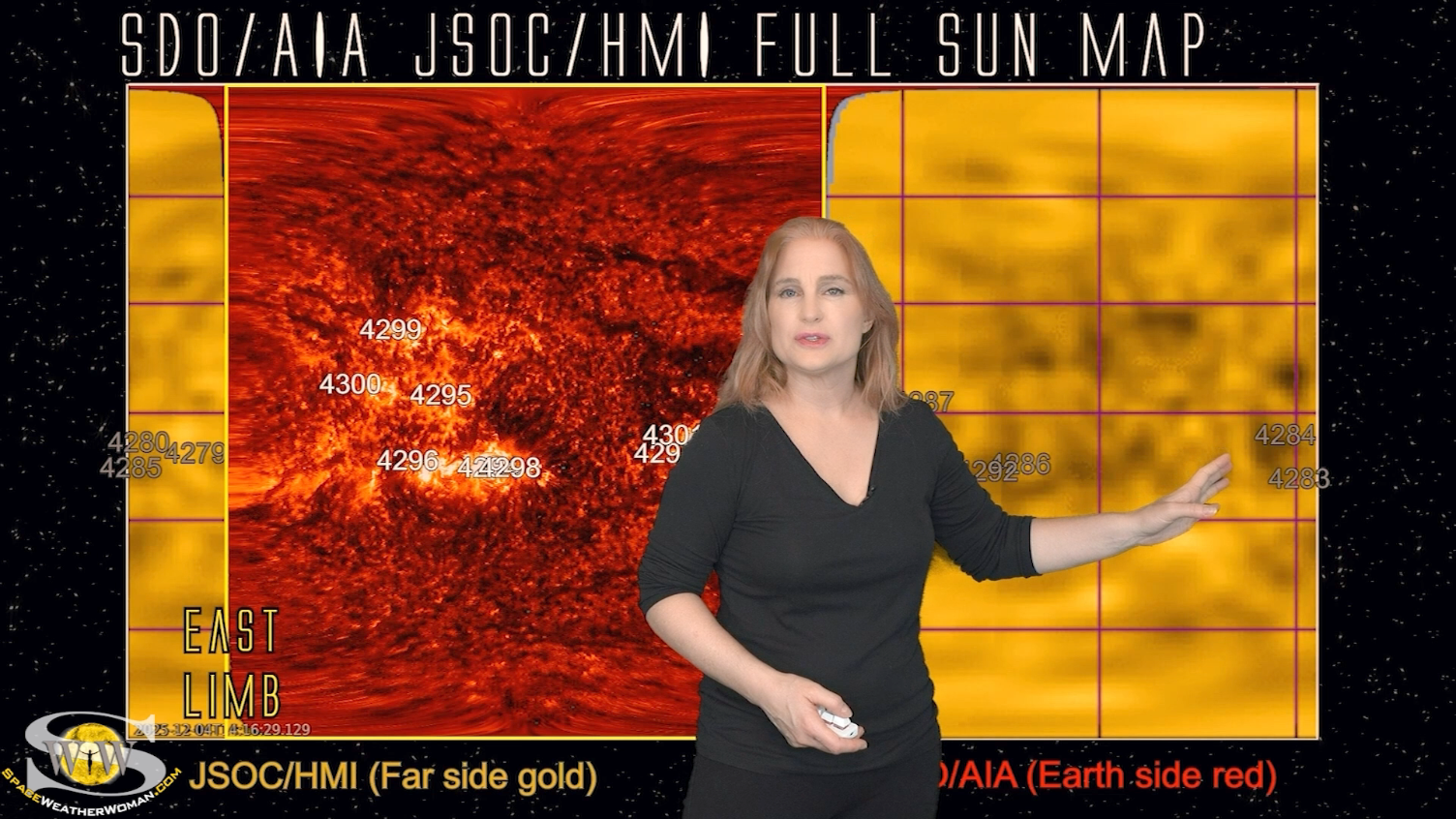
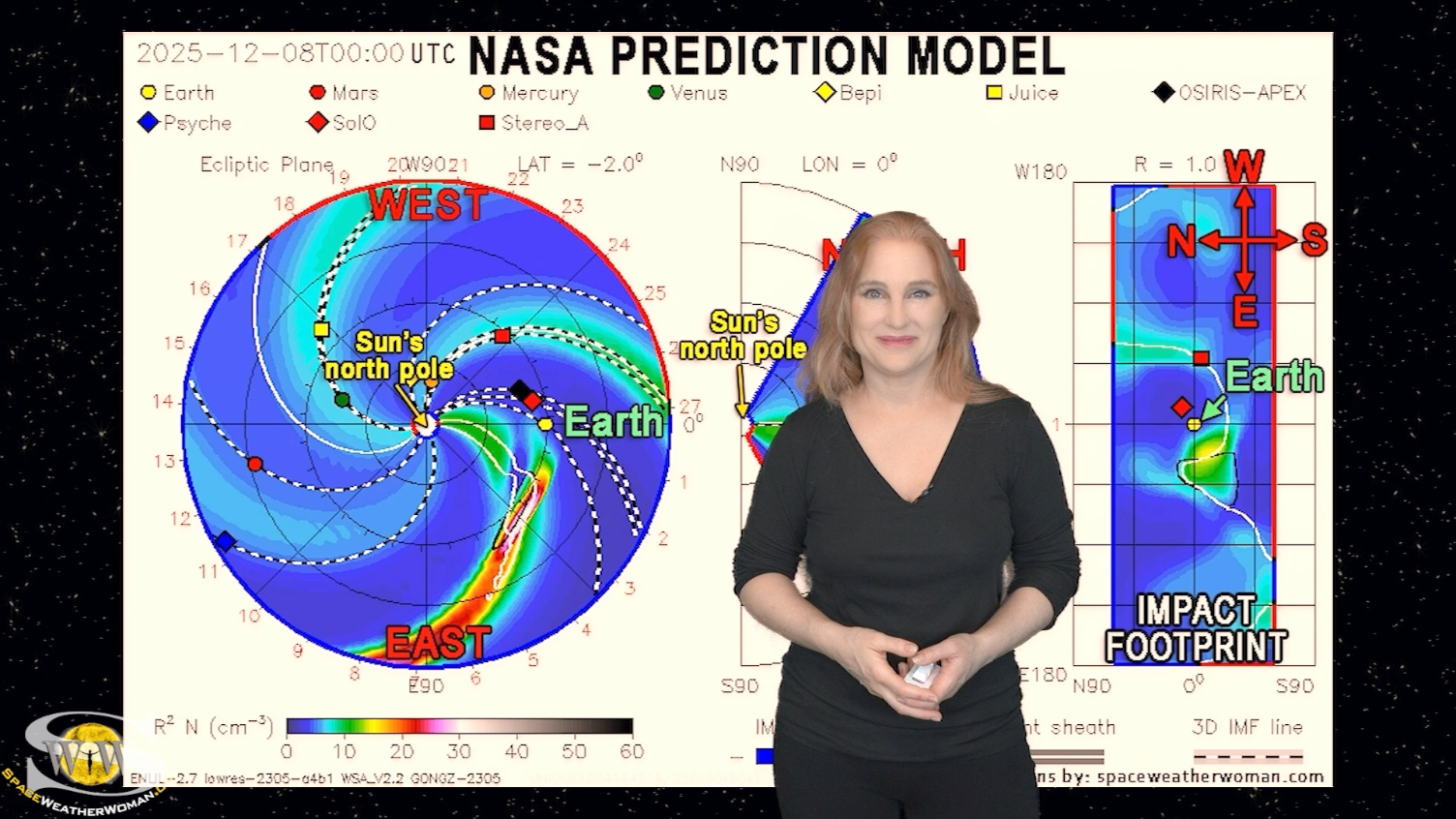
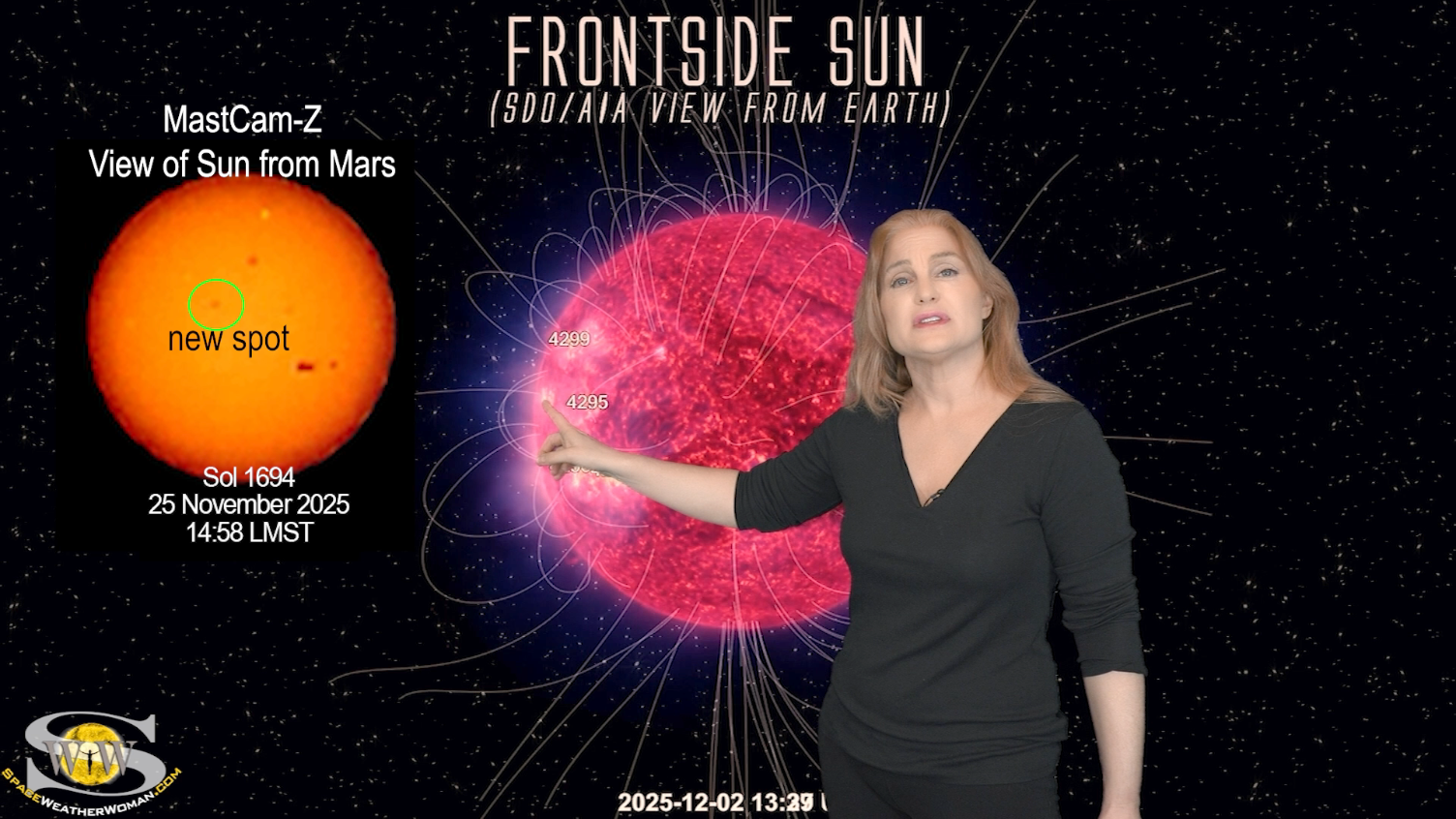
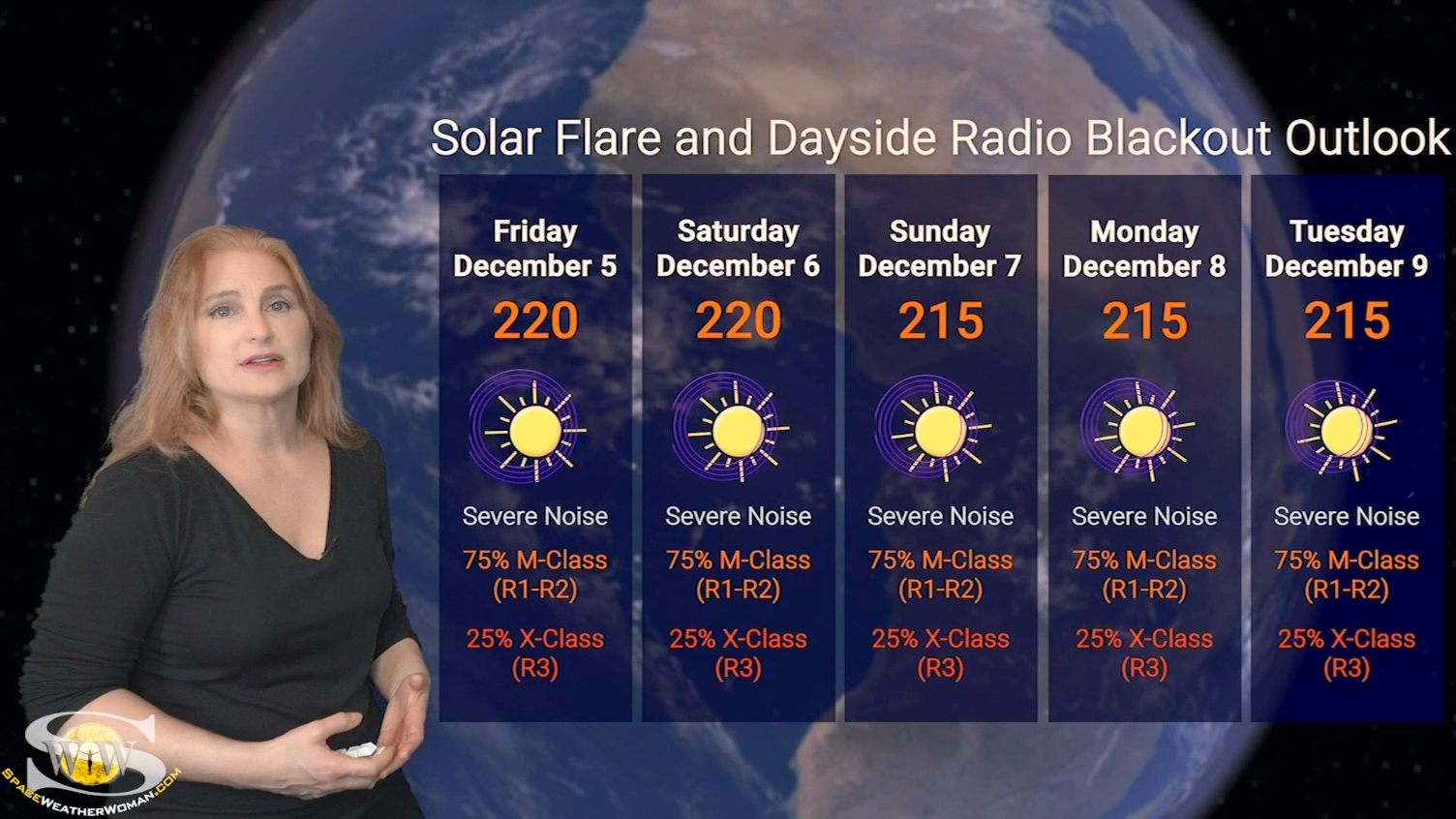
This week has been an interesting one on the Sun to say the least. We started off watching Region 4299 very closely, but after a single X1.95-flare, that region seems to have spent much of its energy. We also have a large cluster of three regions, just south of the solar equator, which impressed a lot of folks with the sheer size of the cluster, but overall, this set of regions has also been well-behaved. Instead, new Region 4300 has taken center stage. Despite being the smallest by far of the big-flare players, it continues to show promise, firing an M6.0 flare within the last 24 hours and launching a modest non-Earth-directed solar storm. With all these regions in Earth-view, amateur radio operators should expect a lot of noise on the dayside radio bands as well as a high risk for radio blackouts above the R1-level. These conditions should persist through the end of the week.
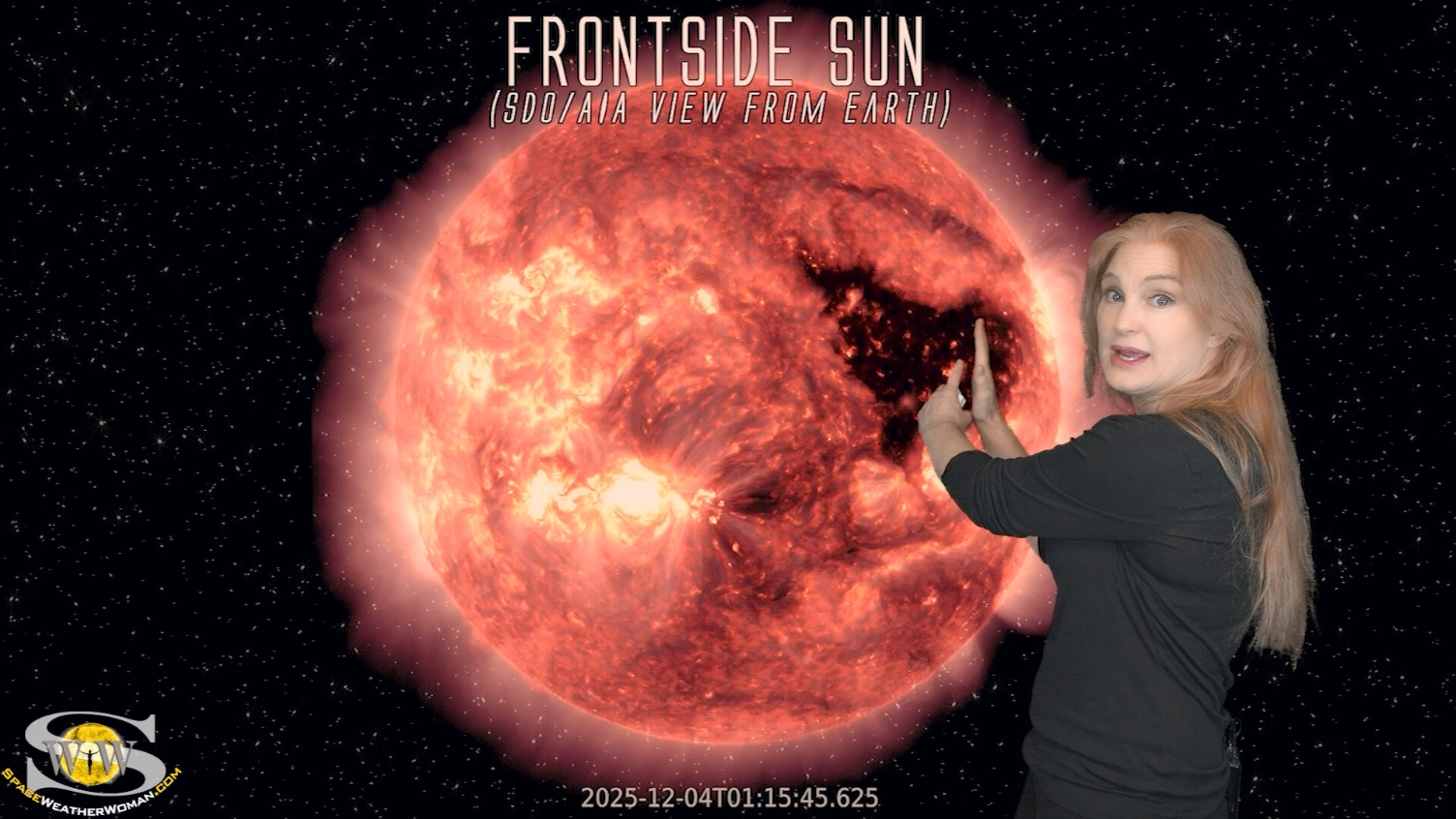
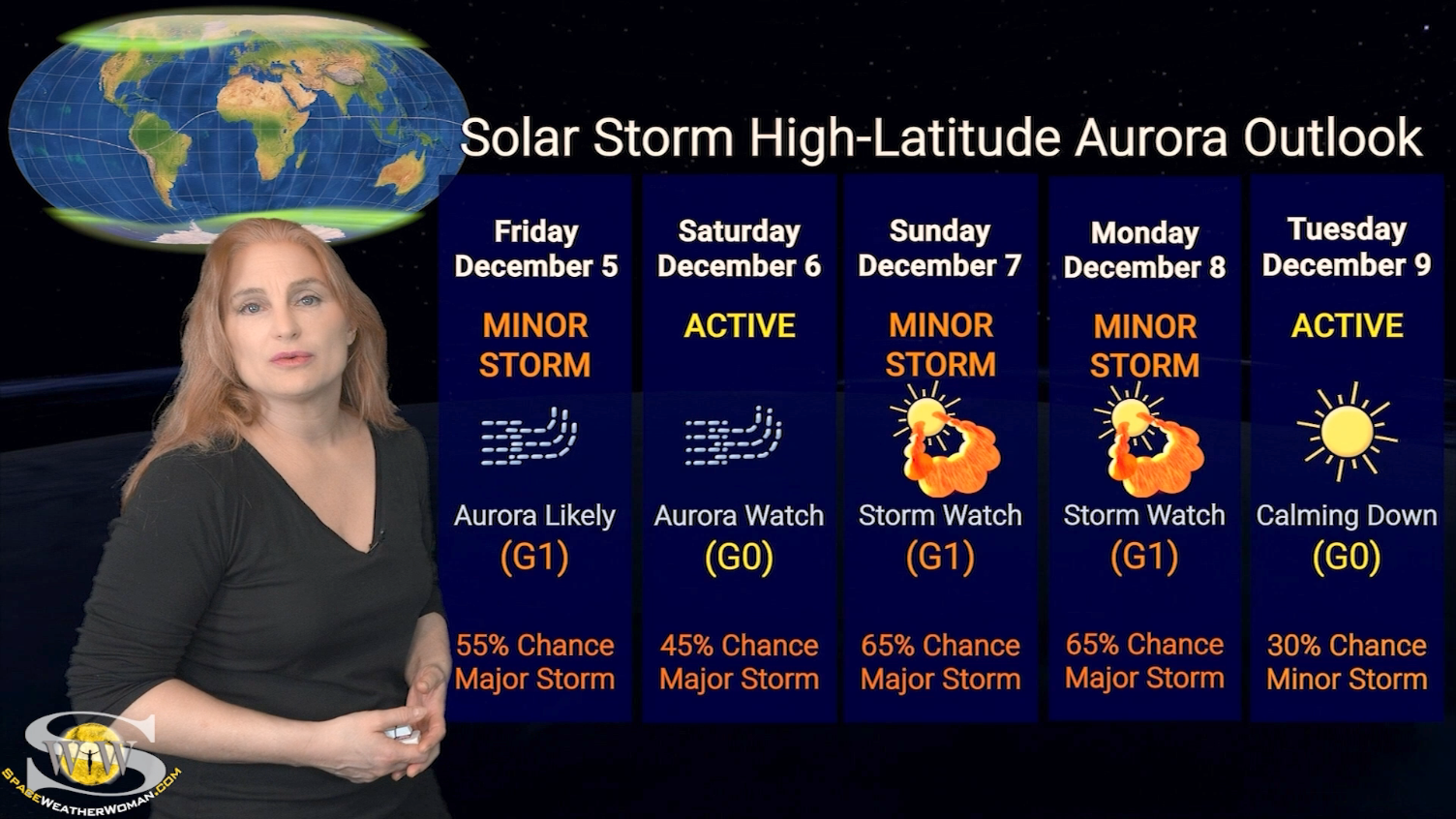
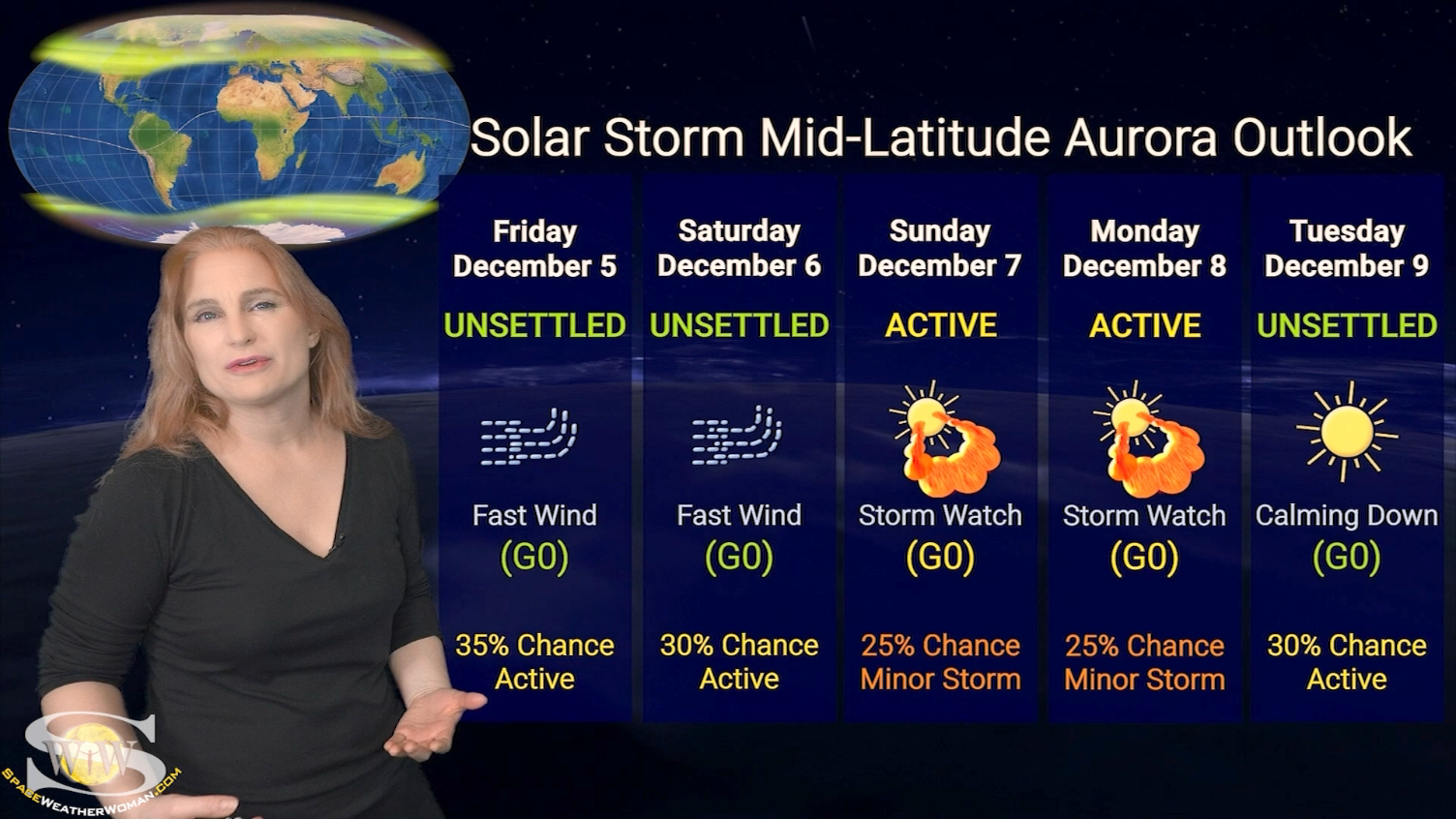
As for aurora photographers, those at high latitudes should be enjoying aurora views from a nice burst of fast solar wind. Although the fast wind had bumped us to G3-levels for a short while, mid-latitude aurora chasers might be disappointed at the fleeting shows. Sadly, this coronal hole is underperforming compared to last month, with slower wind, and an overall shorter duration due to the hole being slightly smaller than it was last month. That being said, one of the recent solar storm launches took part of the overlying field “cover” off the coronal hole western edge. In effect, this made the coronal hole larger, and so the next time we see this region (in about 28 days from now) we could see a stronger fast wind stream again. Wild to think that a solar storm blast can enlarge a coronal hole, but indeed it can!



Podcast: Play in new window | Download (Duration: 17:51 — 24.5MB)
Subscribe: Apple Podcasts | Spotify | RSS