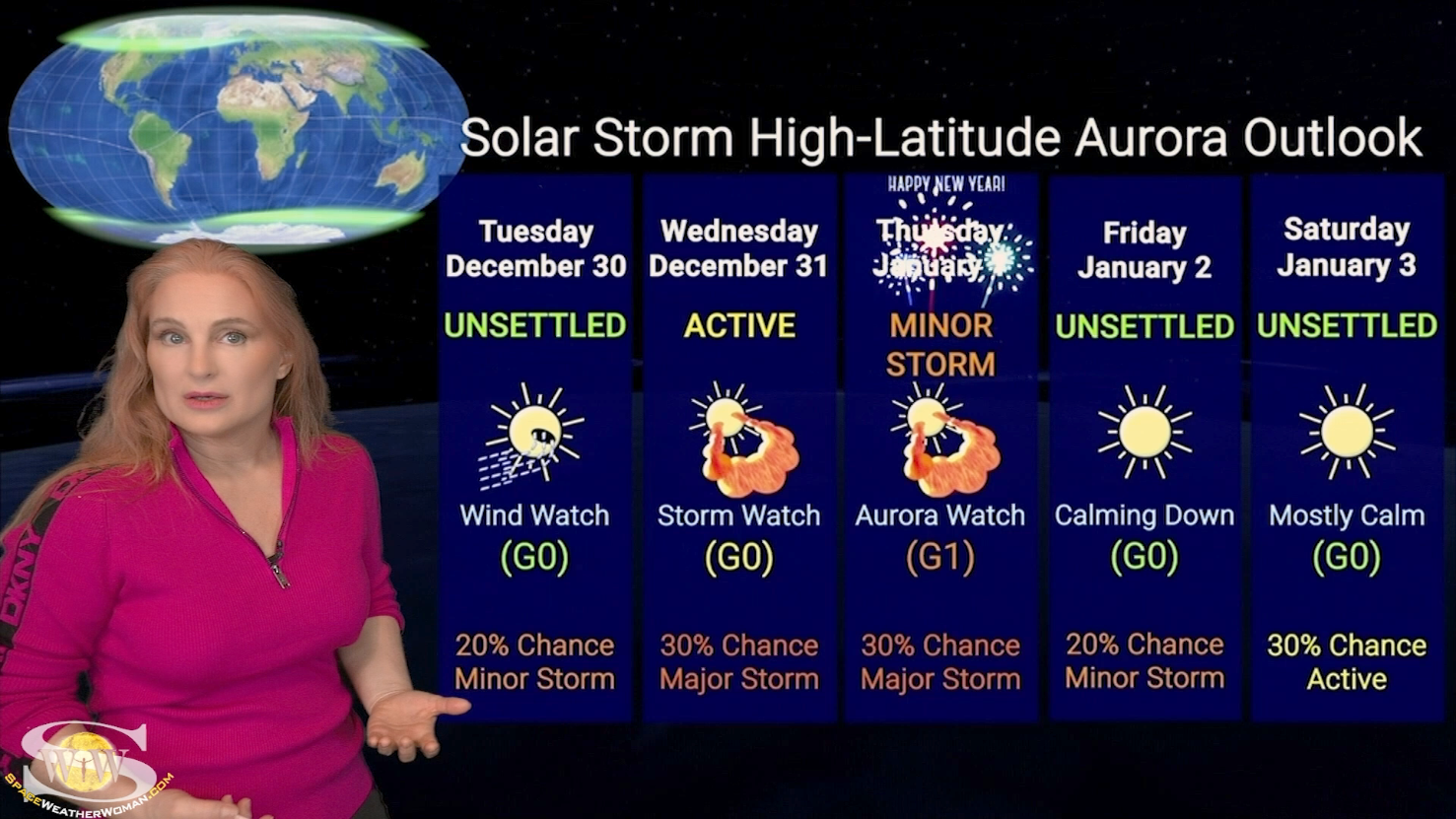
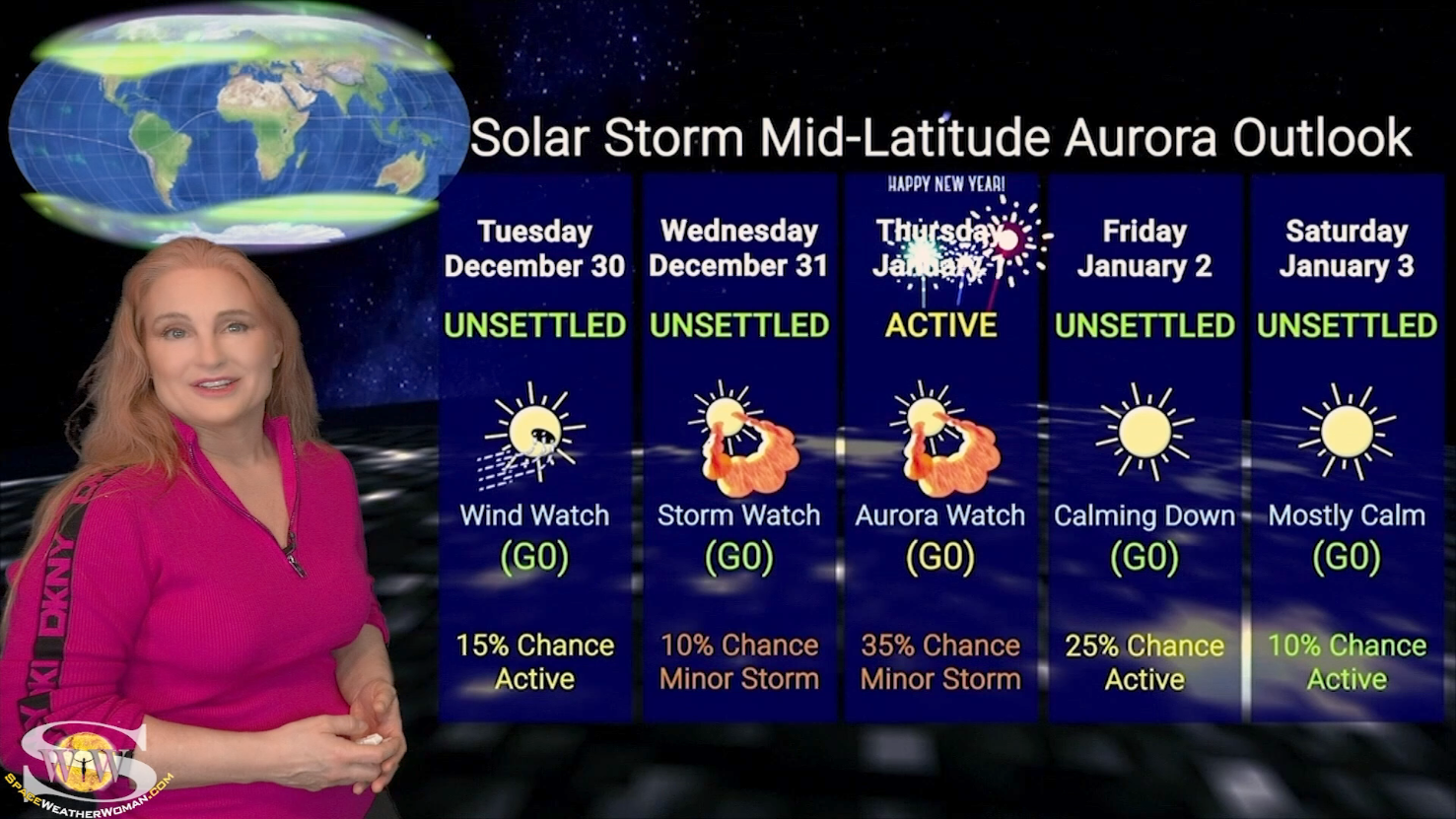
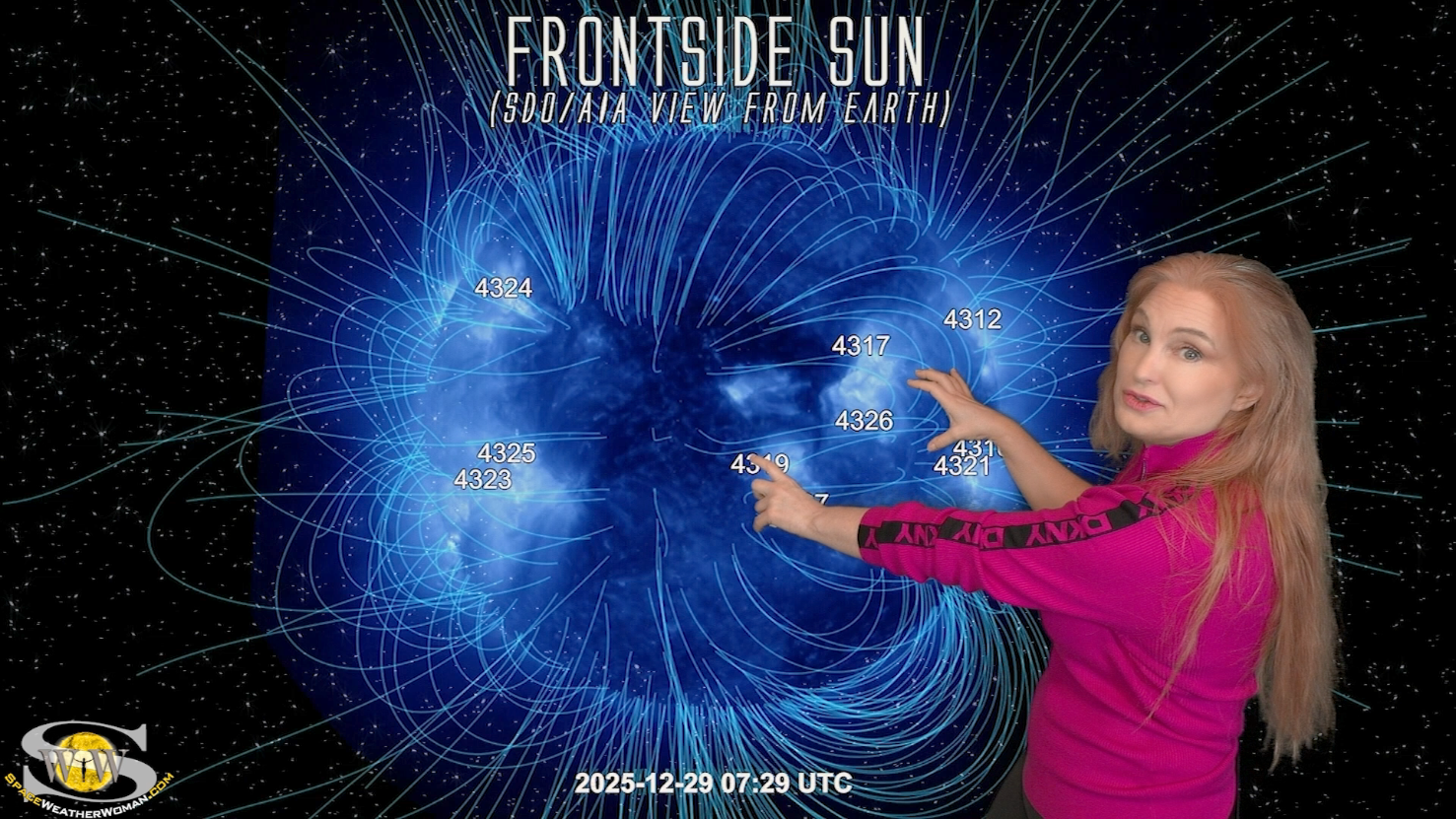
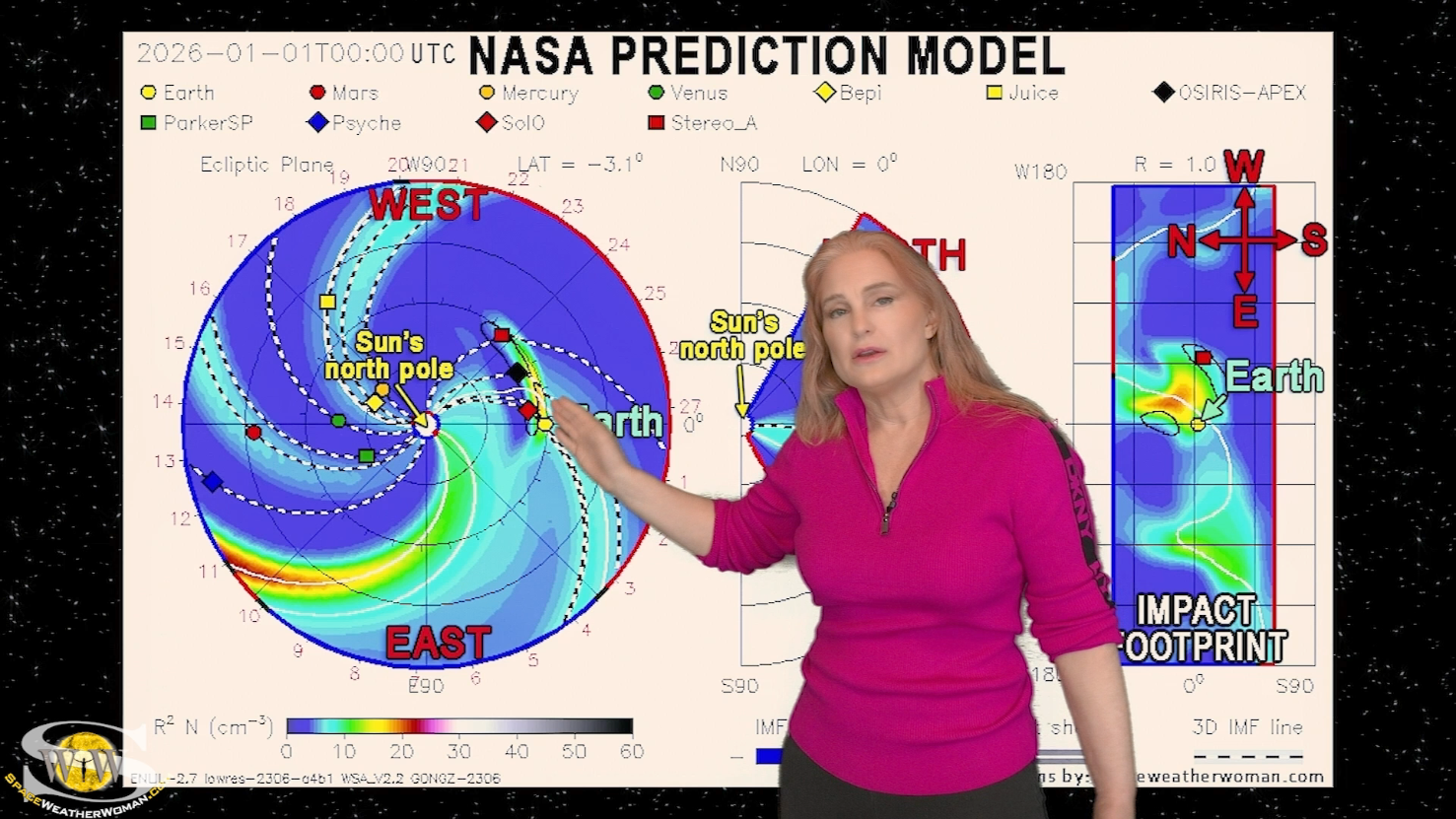
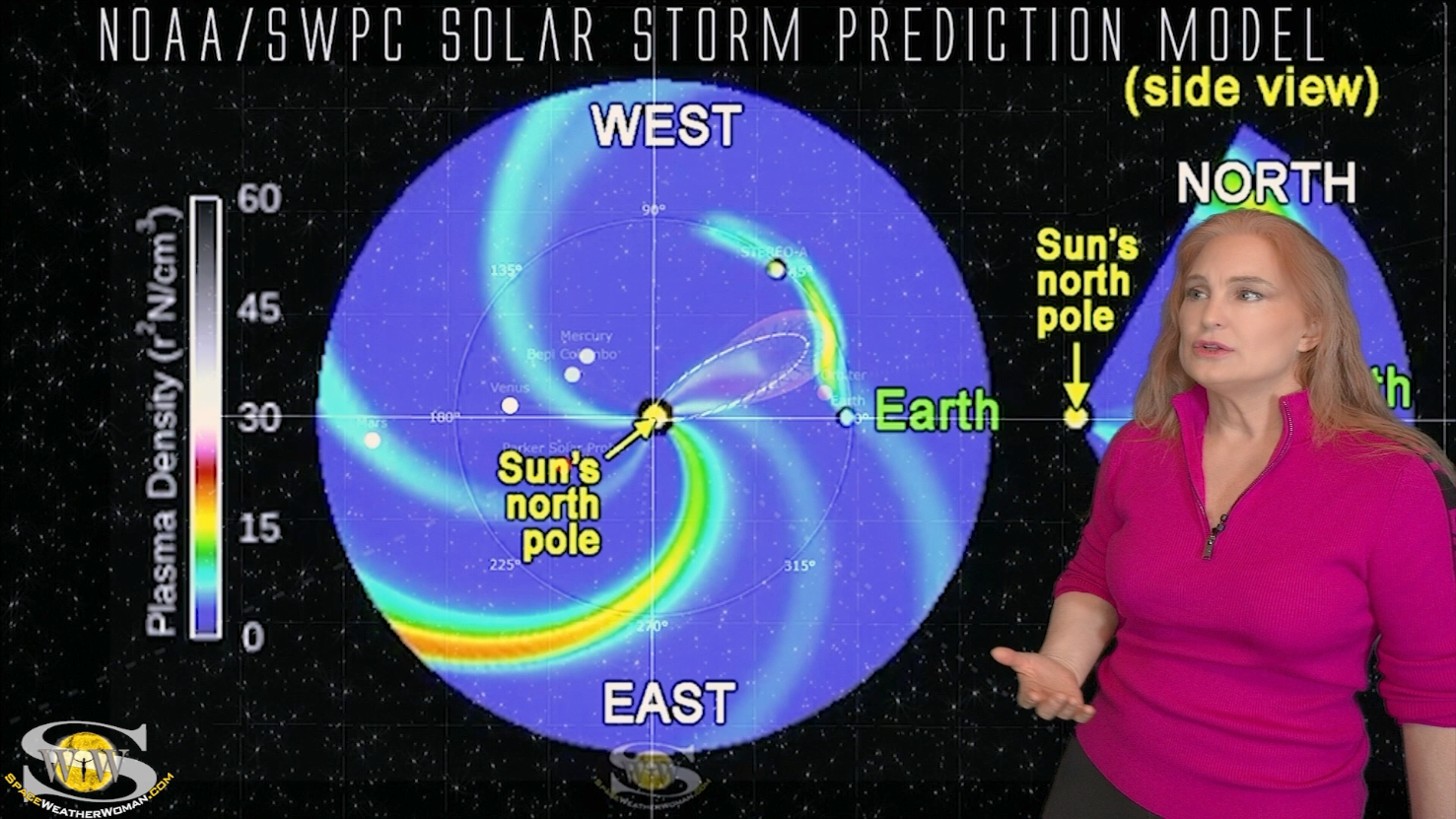
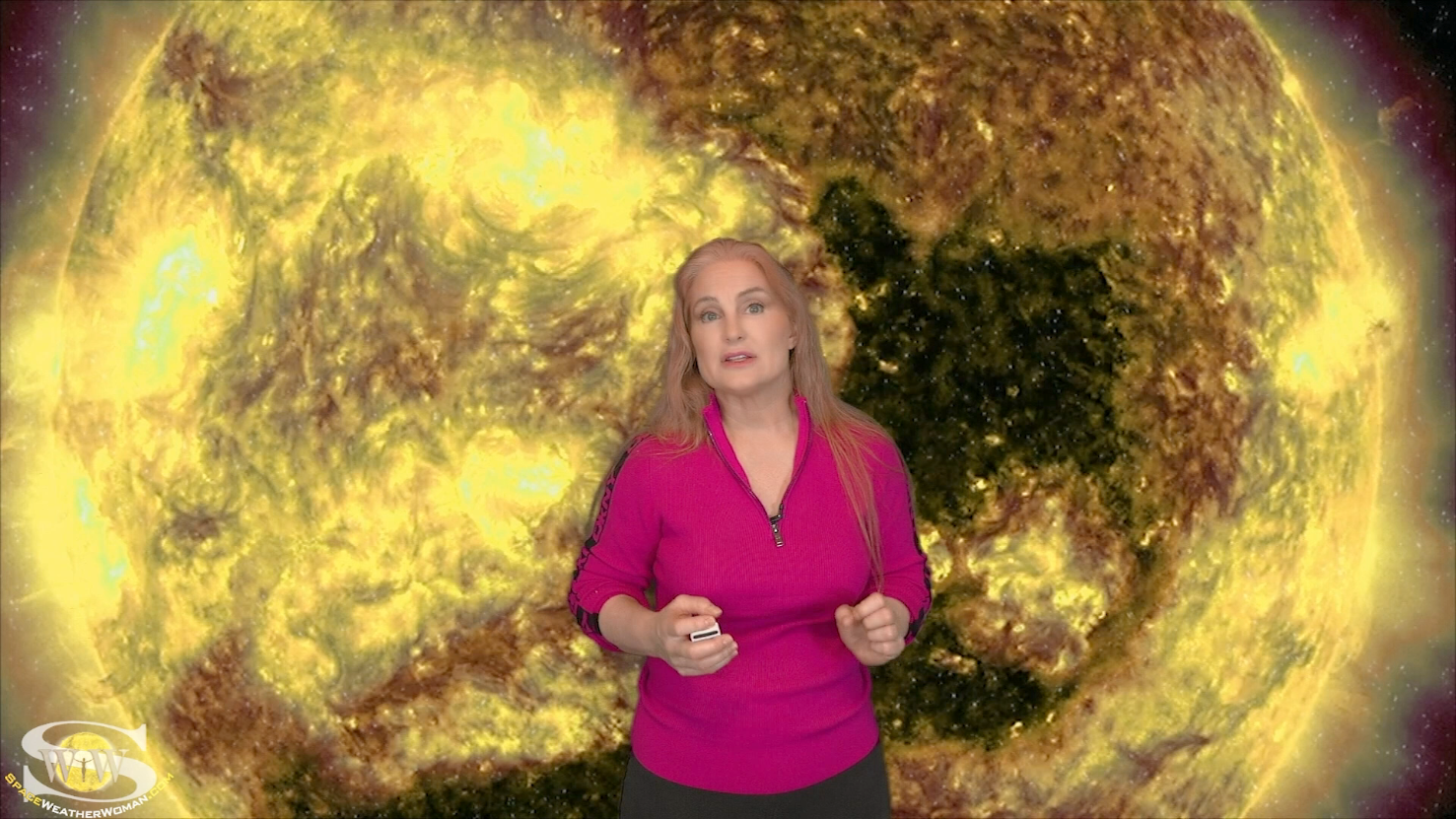
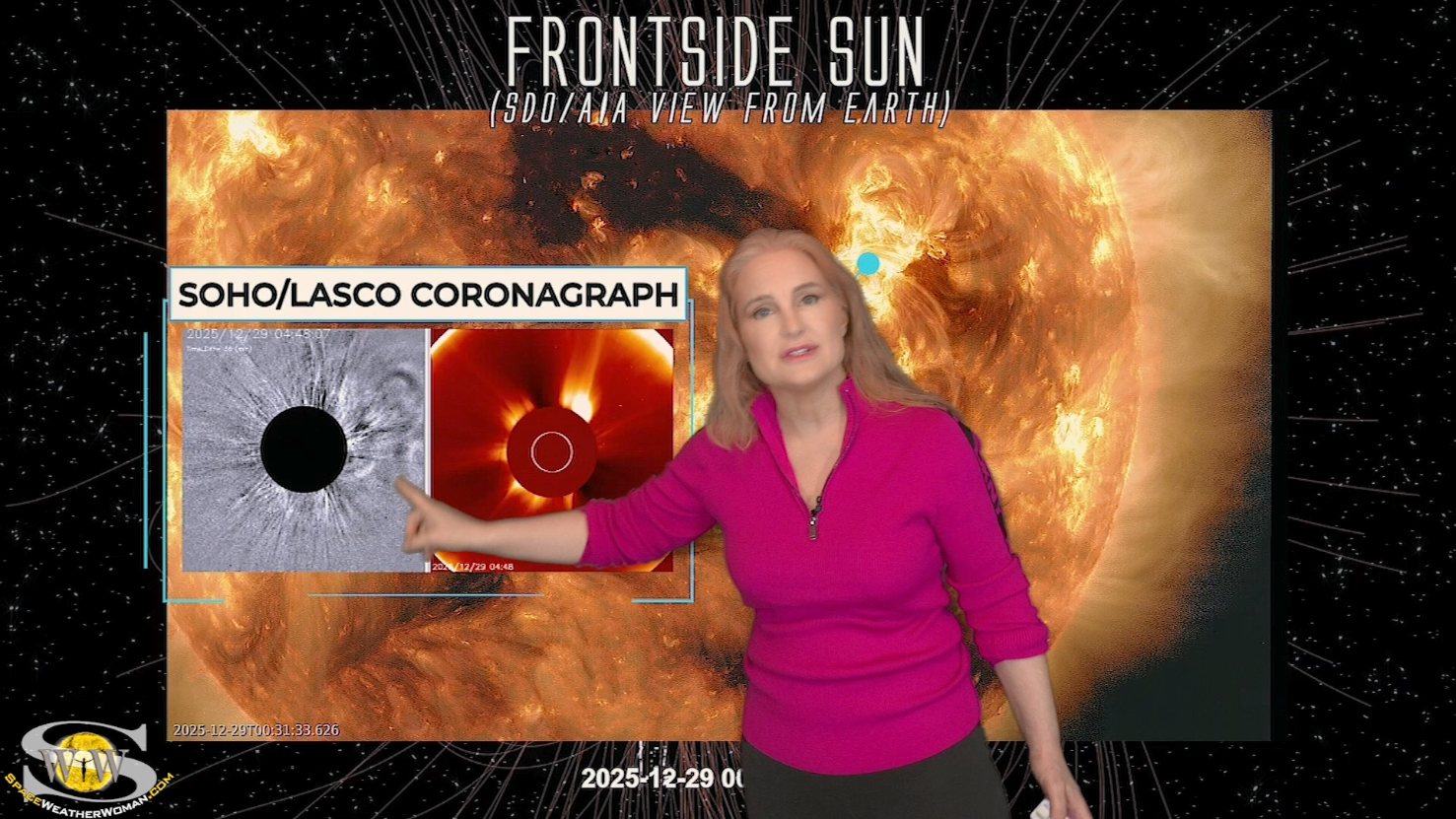
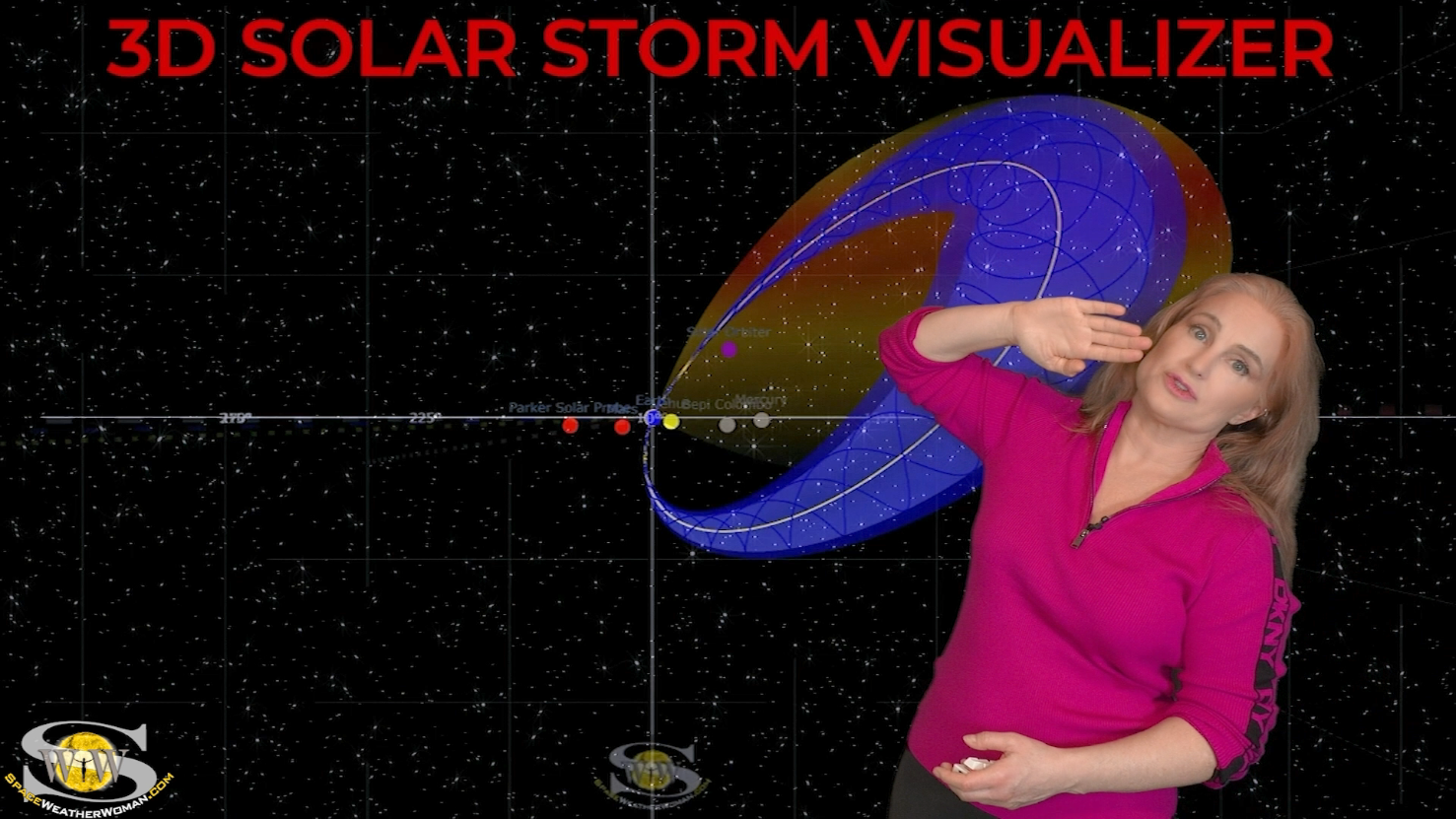
This week, several regions in Earth-view have been growing pretty active with Region 4317 being the first to launch a storm at Earth. But far from being a direct hit, this storm might have to do some fancy dancing with some fast solar wind to give us more than a bumpy ride. But that might actually happen thanks to the fortuitous location of some coronal holes. Fast wind from these holes might actually flip the storm a bit on its side as it comes towards Earth, which would put Earth more in the storm’s path and give aurora photographers a great chance at seeing aurora down to mid-latitudes by January 1. But even if the storm only gives a glancing blow, the fast wind will give those at high latitudes some decent shows that could last until January 2 before things calm down. On top of that we have another storm that could give us a glancing blow late on January 2 so aurora could continue to be visible to mid-latitudes through January 3.
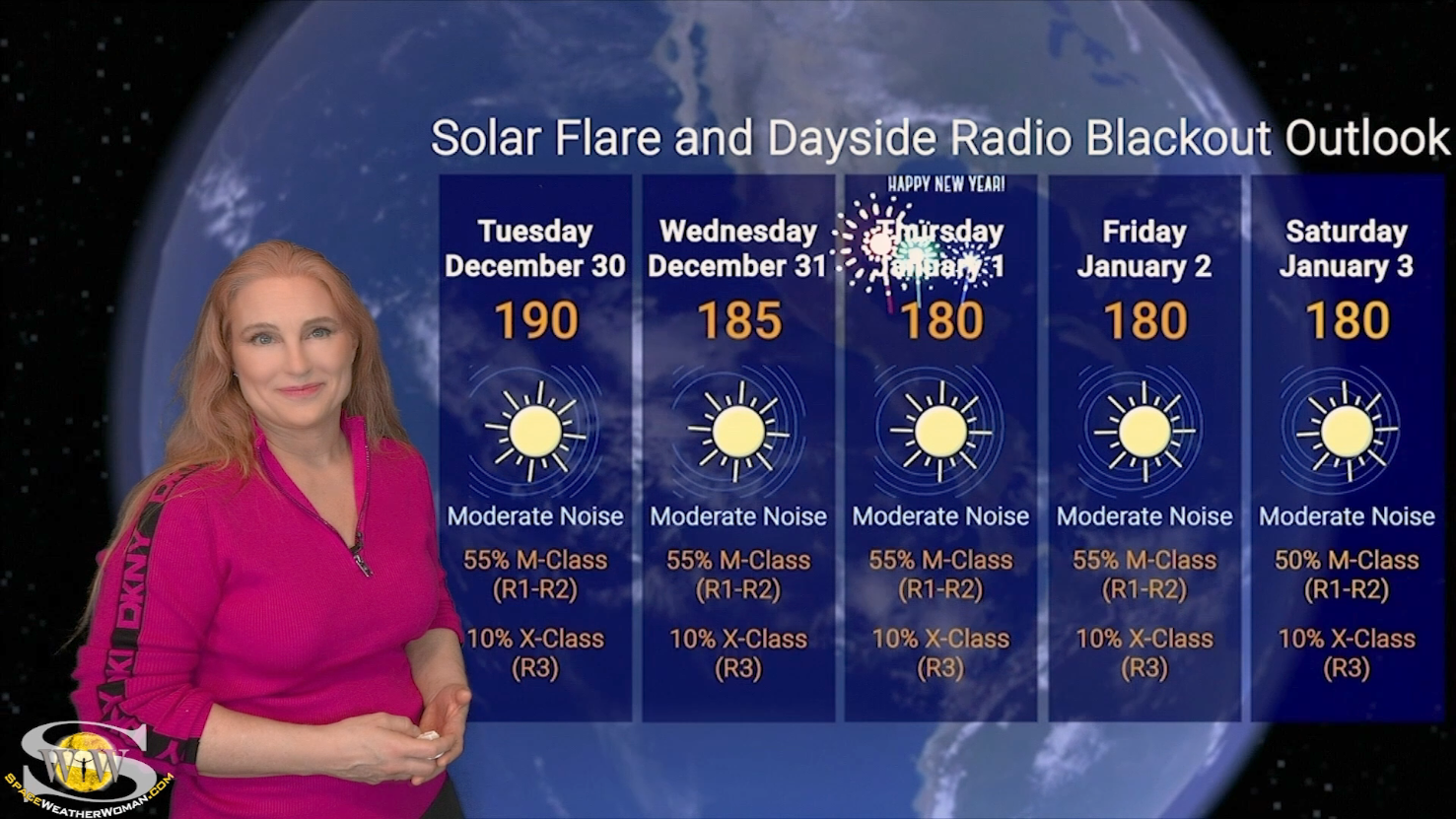
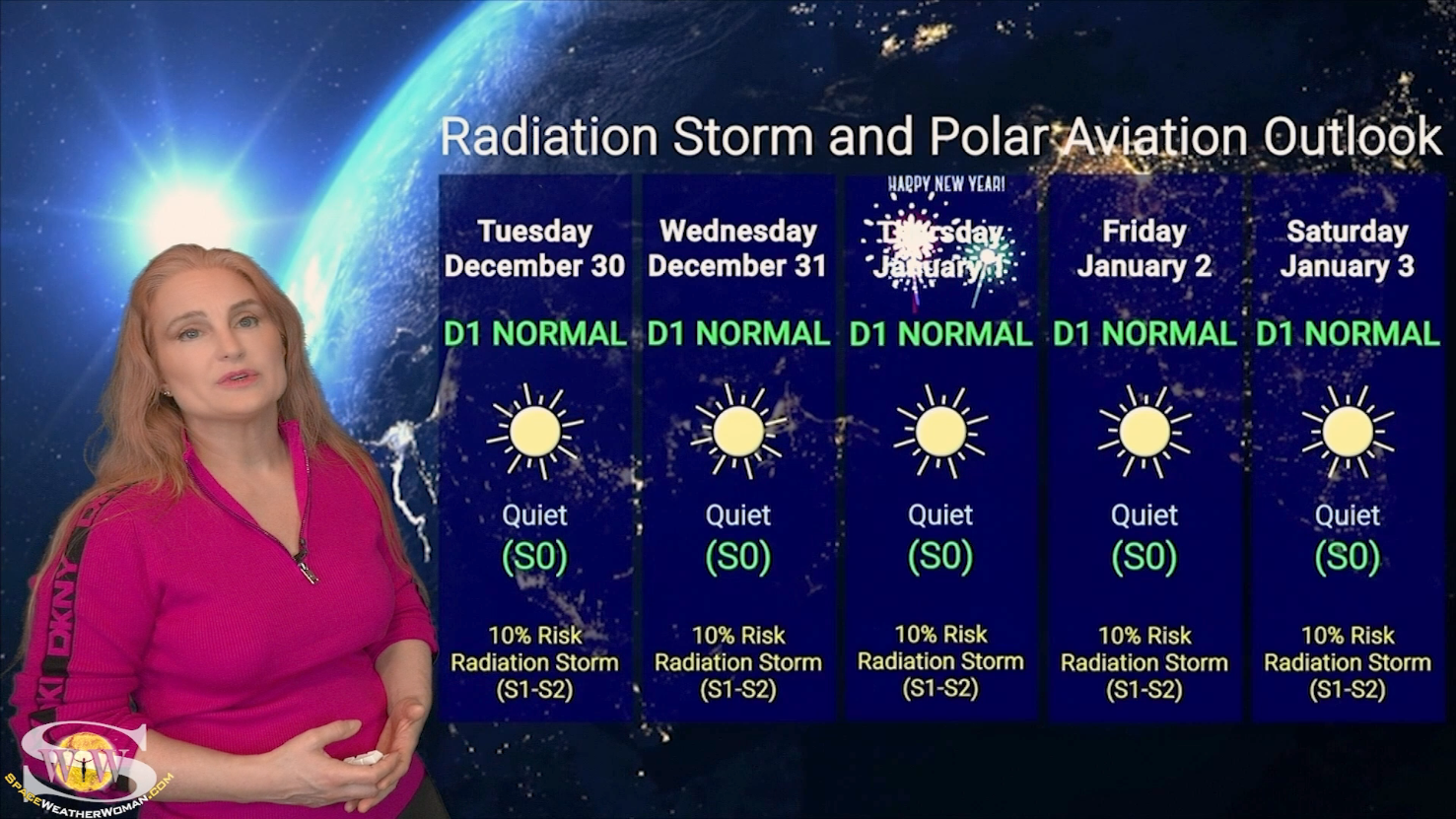
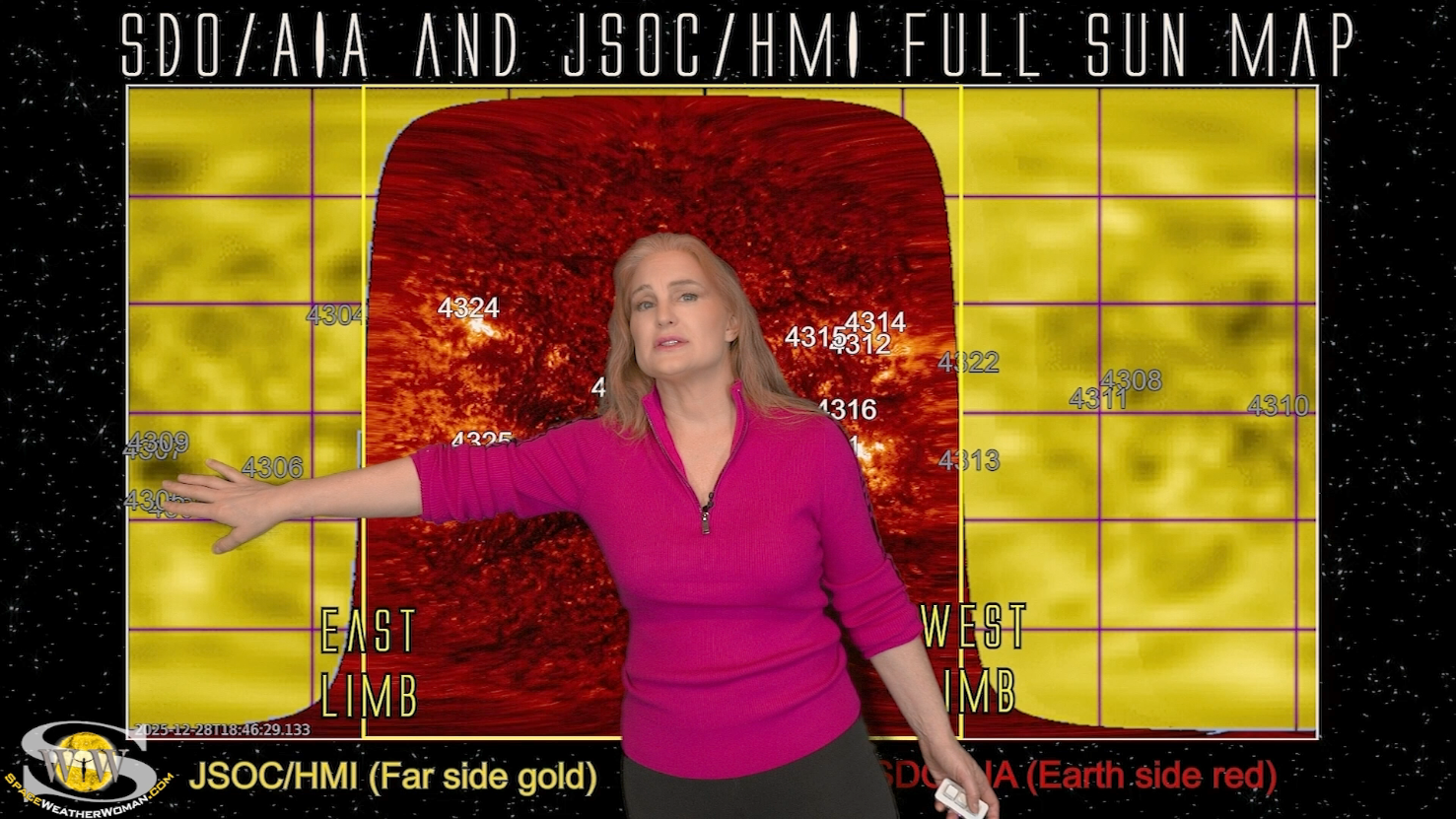
Flare activity is also on the rise, with Region 4325 causing an R2-level radio blackout back on December 27 and Region 4324 showing signs of flare activity as well. Region 4325 is just about to enter the Earth-strike zone so we will be watching it quite carefully. Amateur radio operators and aviators should expect more noise on the dayside HF and VHF bands, but the risk for R3-level blackouts and radiation storms remains reasonably low. Expect these conditions to persist over the next 3-5 days at least, with activity slowly beginning to wane starting early next week. GPS users should stay vigilant on both the day and nightside of Earth near aurora and near dawn and dusk.

Podcast: Play in new window | Download (Duration: 16:07 — 22.2MB)
Subscribe: Apple Podcasts | Spotify | RSS